Dark Data Worlds
Miguel Angel Crozzoli and Thomas Pausz, in collaboration with AIRLab, IT University of Copenhagen
Image: render
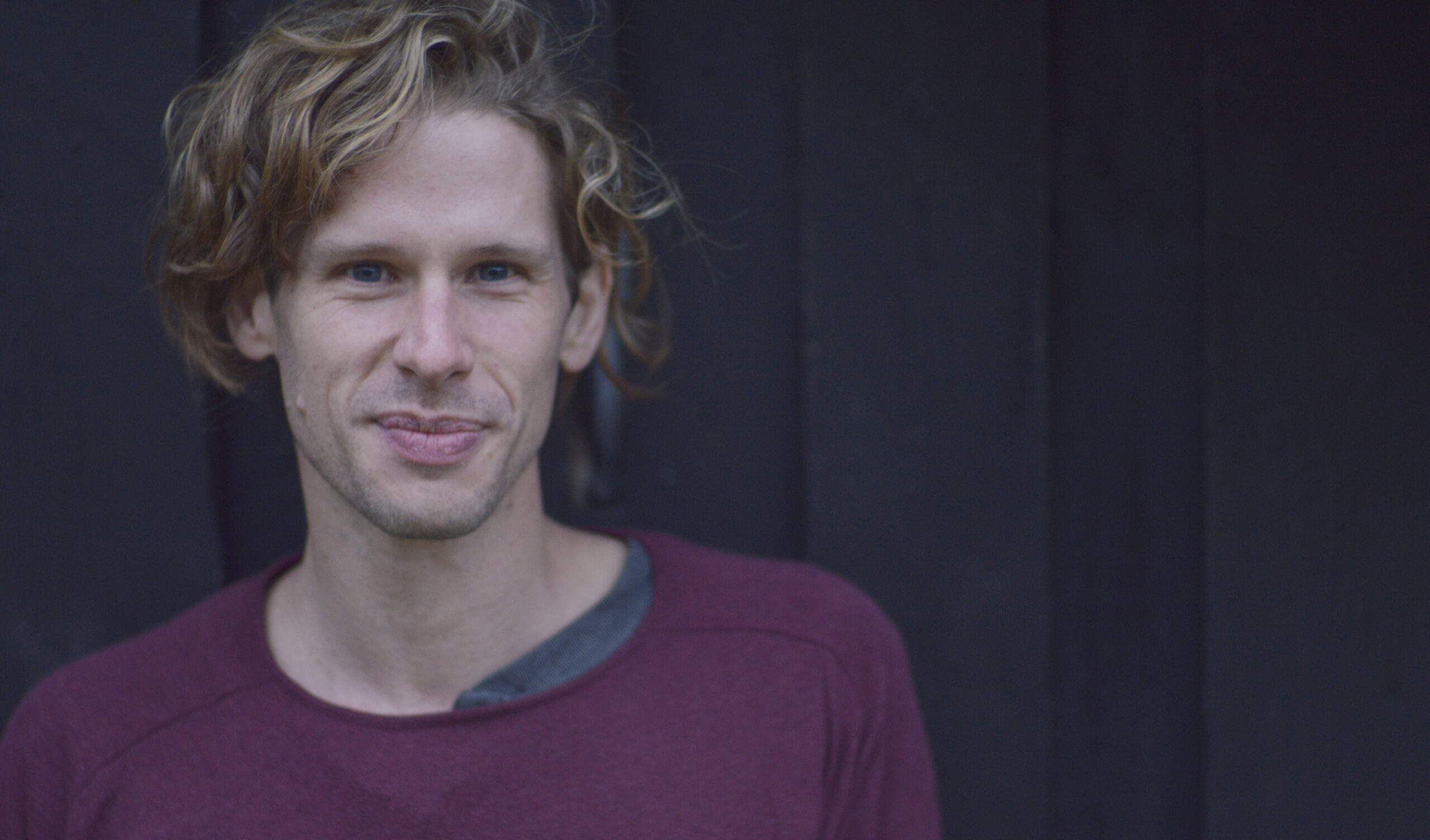
I am a South-Argentinian academic researcher, composer, saxophonist, and sound artist based in Copenhagen.
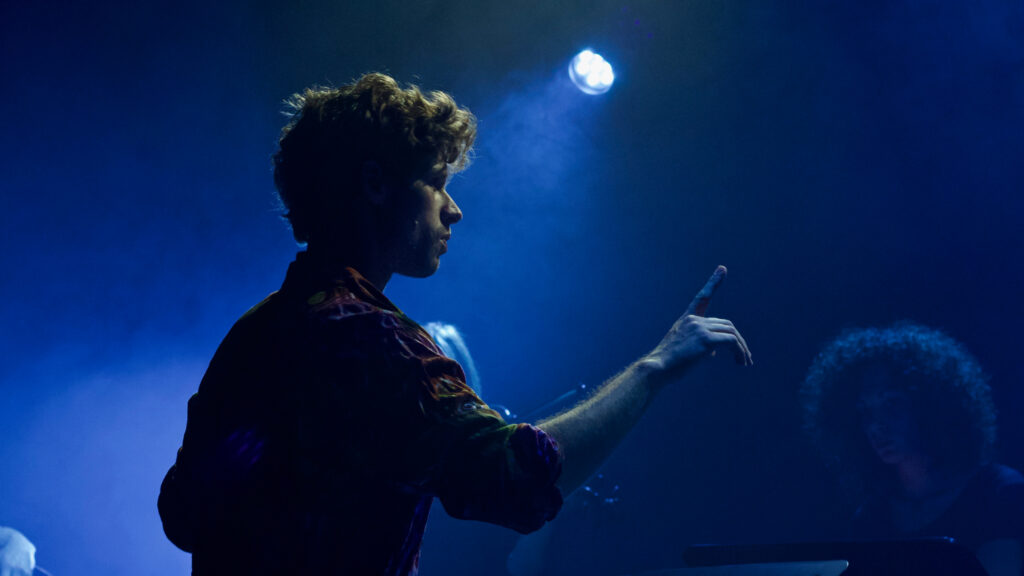
me. I found through sound a way of knowing and an access to a world of data of many types. Throughout the years I developed as a musician and later as a researcher in connection to data and HCI, exploring the affective and entangled dimensions of human experiencing. I research how data can be felt rather than just read, turning perception itself into a research instrument. I further compose for ensembles, build interactive systems, and improvise on the saxophone. As a composer I created 10 records of long compositions navigating between contemporary music and jazz in my earlier career. My work received the Best Use of Sound Academic Award at ICAD 2024, among other recognitions.
‘Inspired by such people as Anthony Braxton, Miguel Crozzoli makes music that is both highly intellectual and emotional.’ — Jakob Baekgaard, allaboutjazz.com >more
research. I am a PhD fellow at the Intelligent Instruments Lab, University of Iceland, where I investigate how interactive multimodal systems can turn data exploration into an affective, embodied practice. I collaborate with people ranging from researchers to artists — including oceanographers, ecoacoustic experts, musicologists, and literary scholars studying emotions in the Icelandic sagas — developing meaningful data experiences for scientific dissemination and artistic contexts, treating data not as passive information but as an agent for meaning-making.
degrees. PhD in Cultural Studies, ongoing (University of Iceland) · Advanced Postgraduate Diploma (2022, RMC) · Master in Music Creation (2020, RMC) · Cultural Management (2015, UNC) · Jazz Specialization (2019, Manuel de Falla) · Bachelor in Music (2008, EMBA)
‘Miguel Crozzoli, saxophoniste ténor, nous rappelle au bon souvenir des saxophonistes ardents de la free music…’ — Le Son Du Grisli >more
photo: Luise Volkman
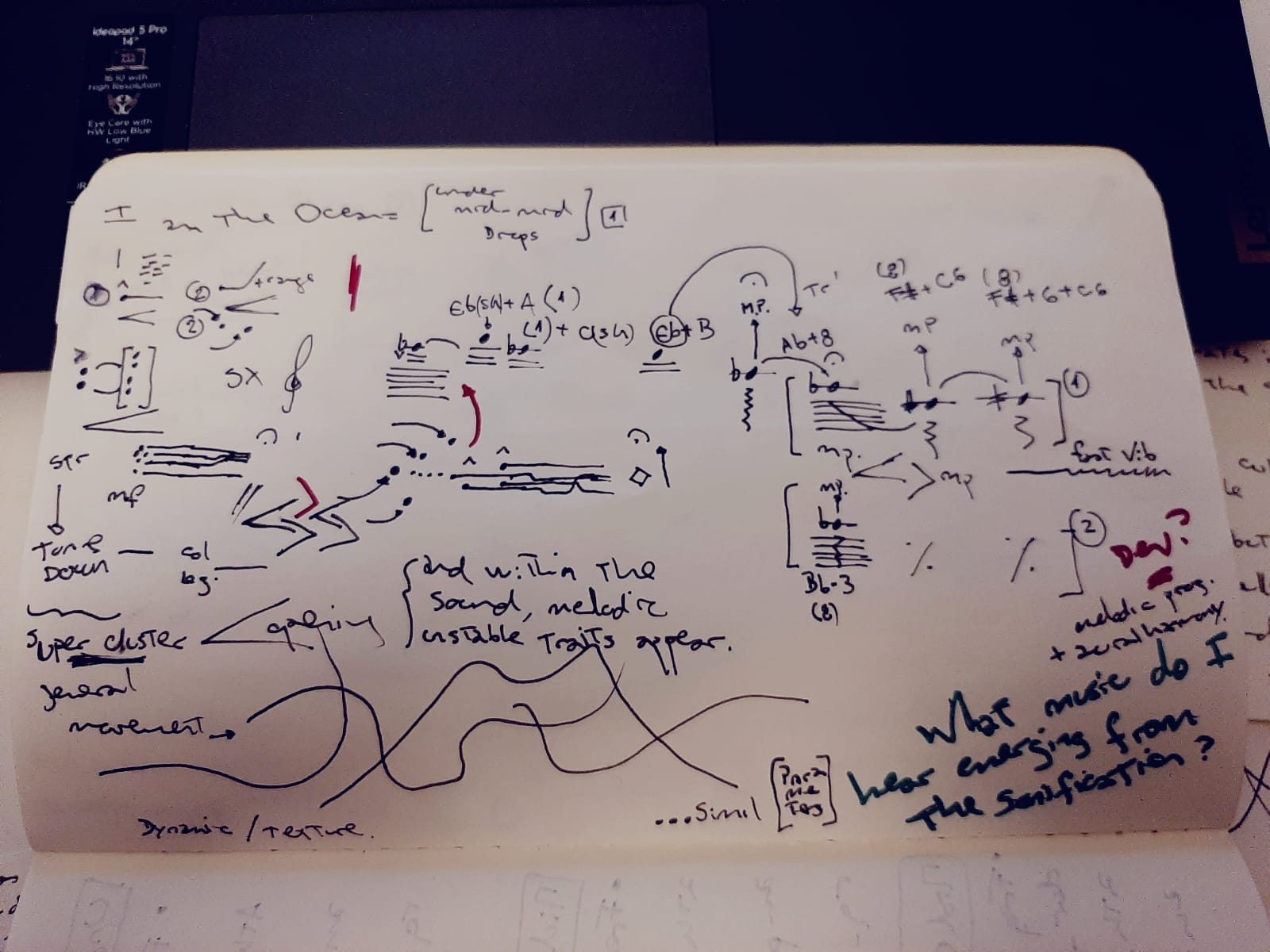
The music I composed for this group is inspired by climate emergencies and sounds like the spirits of nature rising in communion — like the sound of the ocean and the forest, weaving textural nets and spiking chants. The audience enters a space of reflection, where wild emotions emerge in a soulful journey.
After my big orchestral project The Strangement Society, I got curious about the creation of scientific sonifications — could I use my own aesthetic universe to design how sonifications should sound, and how different data mappings interact with sound parameters such as frequency modulation and panning?
During 2020–2022 I conducted Sounding Numbers, a practice-based art research project at the Rhythmic Music Conservatory in Copenhagen, part of my Advanced Postgraduate Degree. The data came from deforestation and ocean contamination — because I believe we should talk more about, and find new ways to communicate, climate change.
With my last piece, I Am The Ocean, came a plot twist: instead of scientific theories I worked from philosopher Timothy Morton's Hyperobjects — philosophy ecologies connecting to a more abstract layer of imagination.
The project had two artistic outcomes: my electronic-acoustic compositions and participatory sound installations — the sweet and harsh results of my perception of our dystopian present. A perception that shows the dark beauty of the end of the world, while offering awareness and hope for community action!
My wild and beautiful SCI-Music Electronic-Acoustic Orchestra — a 13-piece ensemble with voice and electronics.
From 2018 until 2020 I composed music for this small orchestra, inspired by cosmology and in conversation with scientists conducting fascinating outer-space research. The musical outcome came as a journey into an immersive sci-fi experience: layers of textures driving hypnotic melodic passages that develop into beautiful choral layerings.
Three orchestral pieces, each grown from space science: neutron stars, colliding black holes, and the cosmic microwave background.
For Cosmic Transients I worked with Dr. Radoslaw Jan Wojtak of the DARK Cosmology Centre (Niels Bohr Institute, Copenhagen) — grounding the compositional process in the science, and the science in emotion.
Artworks where sound, light, the environment and the participants' own actions come together, turning scientific knowledge on climate, ecology, the cosmos and the body into something felt and shared.
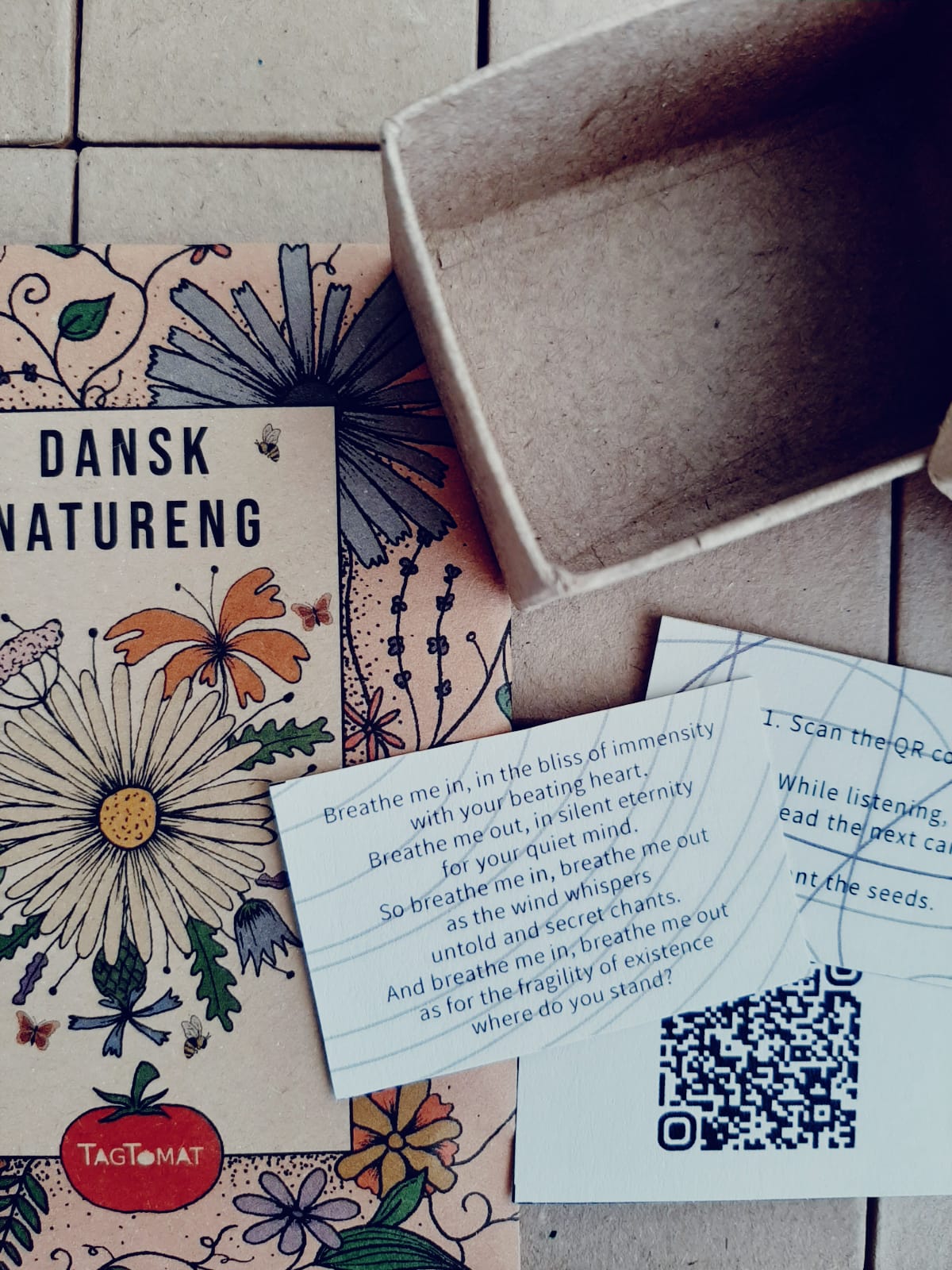
An installation on climate emergencies inviting the audience to listen to the health of our world's forests while engaging in a deforestation micro-activism practice. The sonifications use 20 years of data from Global Forest Watch. Resilient by design: it works in gardens, forests, greenhouses — or a lonely tree in a shopping center.
Walk around and listen, this is your environment. See the colors and feel the textures surrounding you. .breathe. Put your ear against the trunk of the tree. hear. .breathe again. Plant some seeds with your bare hands.
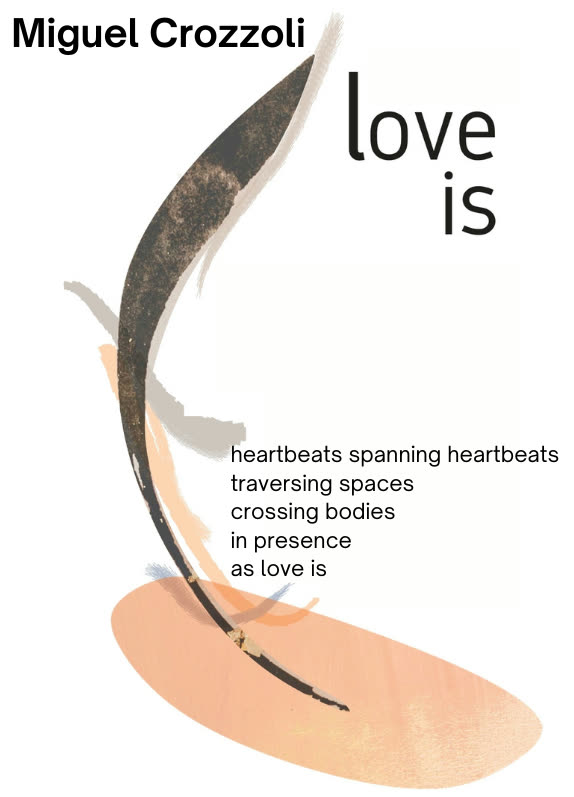
heartbeats spanning heartbeats
traversing spaces
crossing bodies
in presence
as love is
Press and hold a heart. Be patient, let the machine listen to you.
Headphones help · the sound is the installation's own SuperCollider design, running in your browser
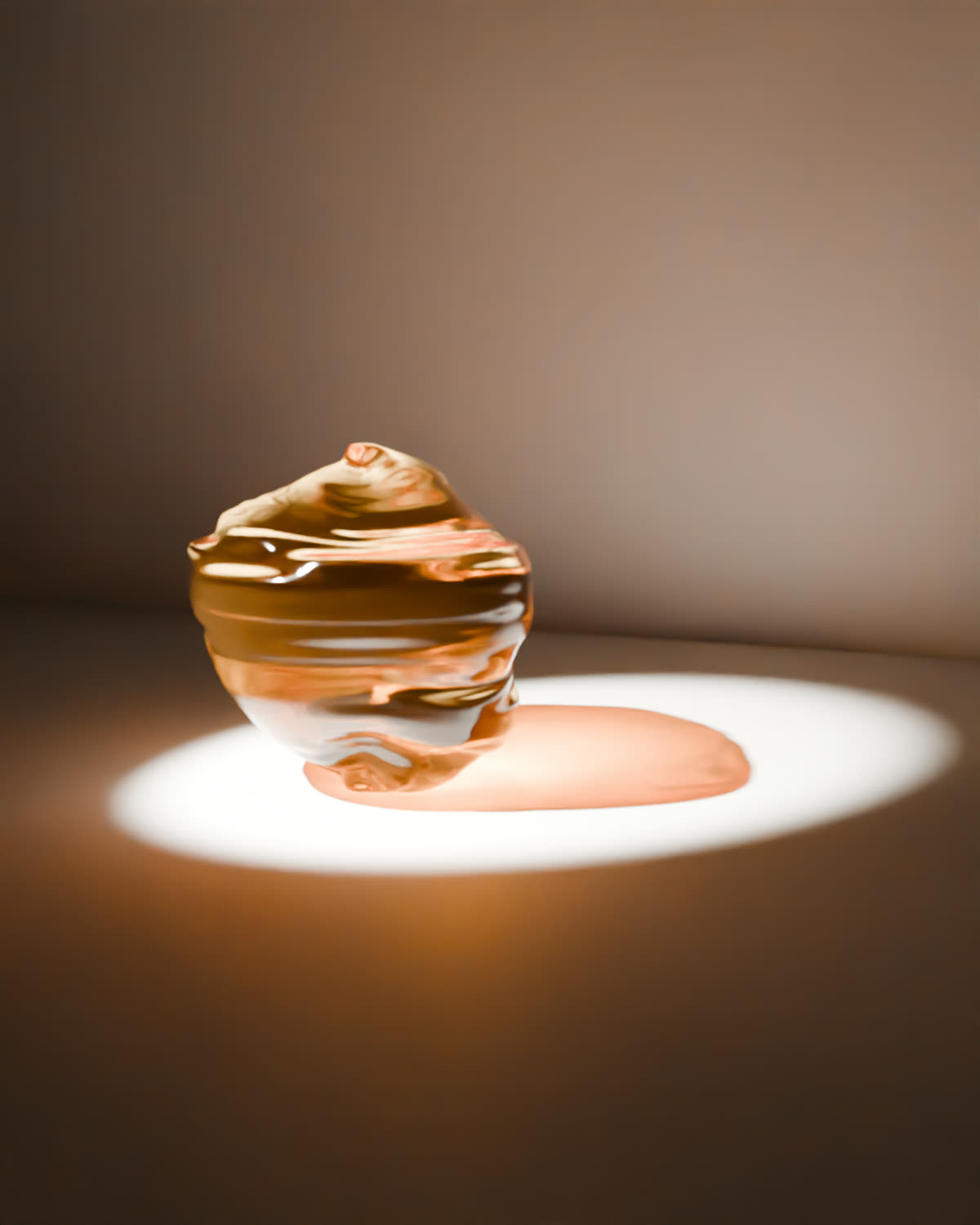
These heart-like machines come alive when feeling your heart, sensing your pulse. This is not your heart, but a raw state of love, and by holding them, love is within, and yet expanding beyond.
Their soft, strange texture and the light coming from within lure you in. Cover the green eye long enough and the machine starts to beat; its light changes colour and a rhythm is created. Is this my rhythm? Theirs? In the headphones, what first seems a soundscape built on these beatings turns out to be the machines talking to each other, and to you.
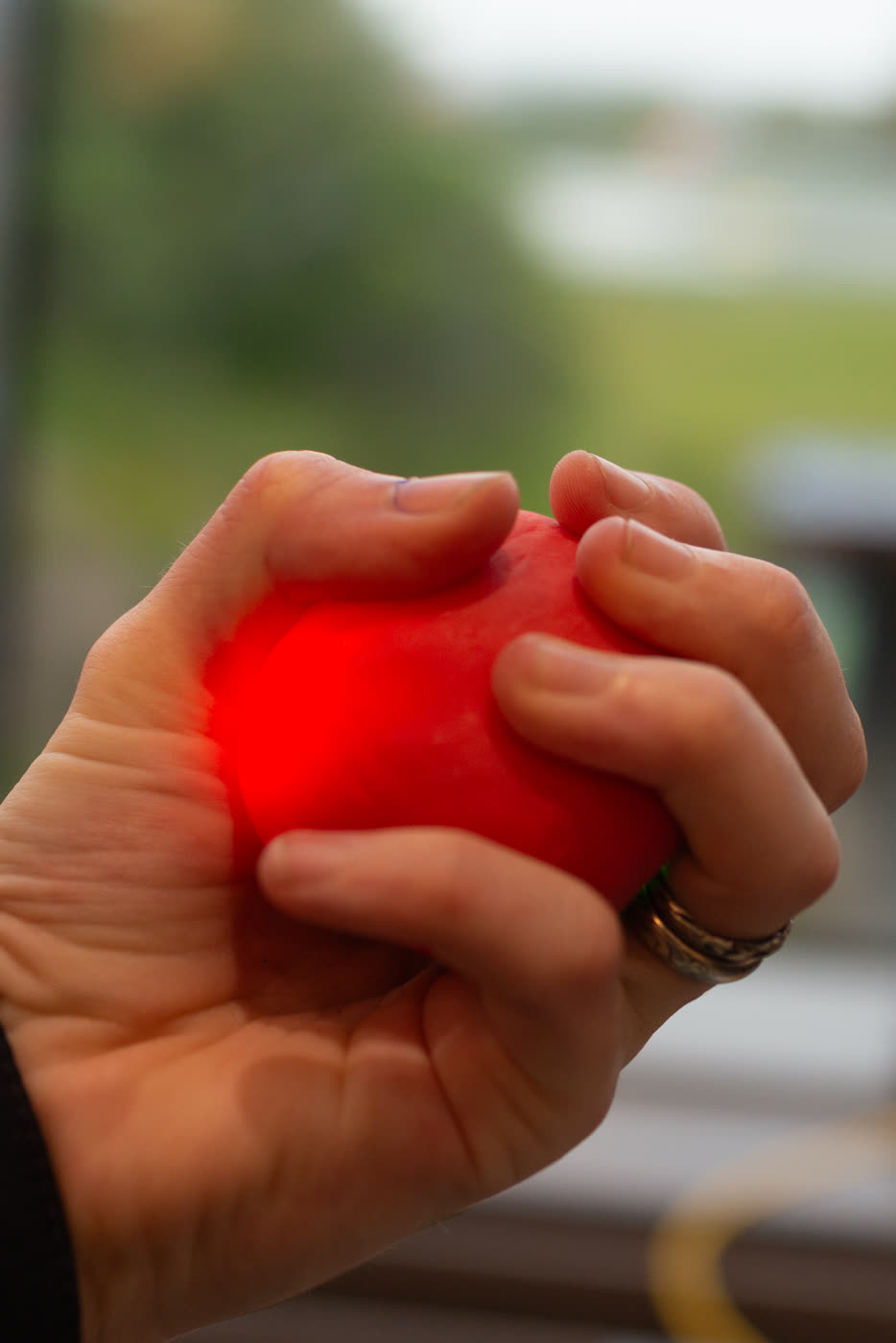
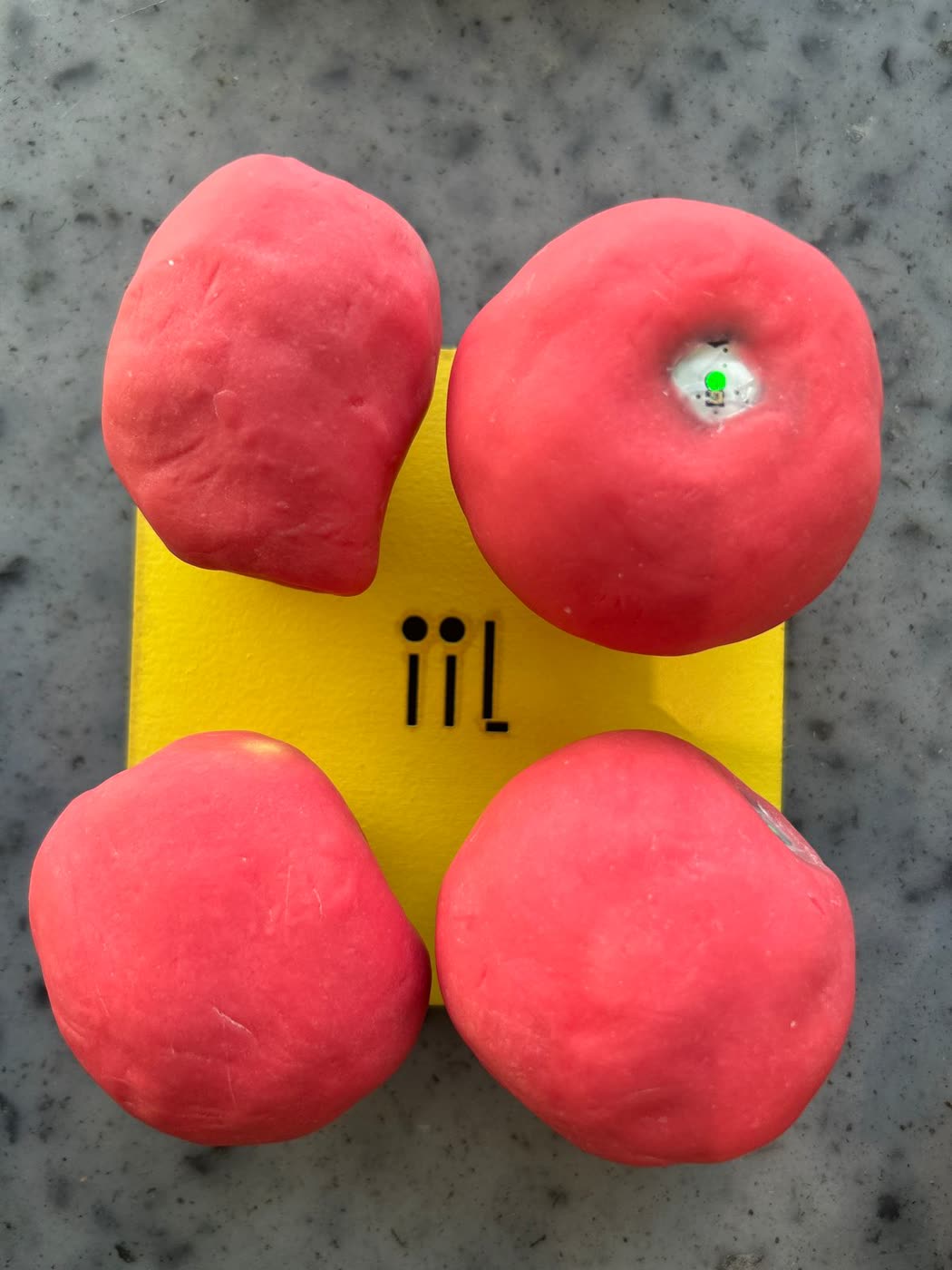
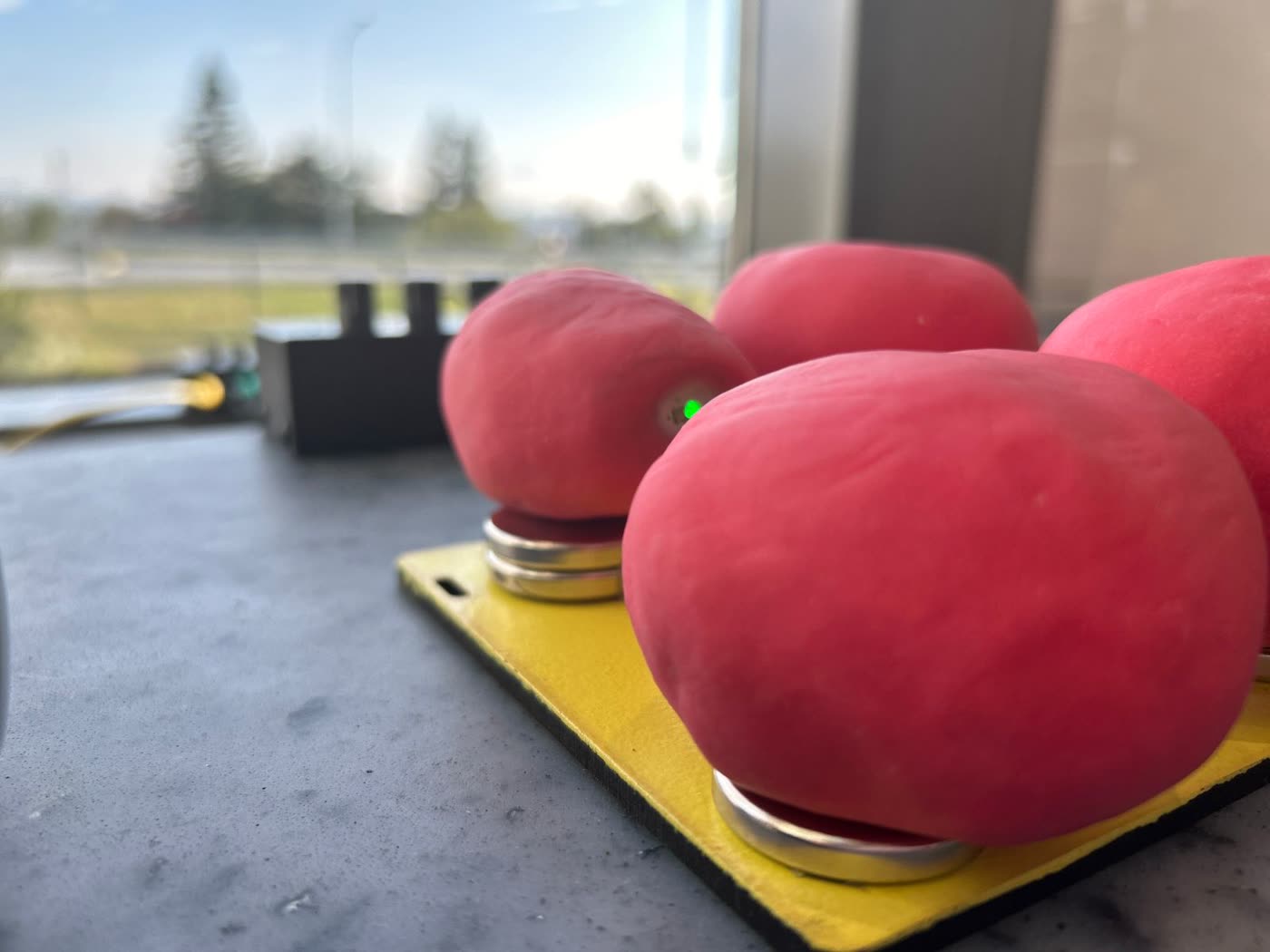
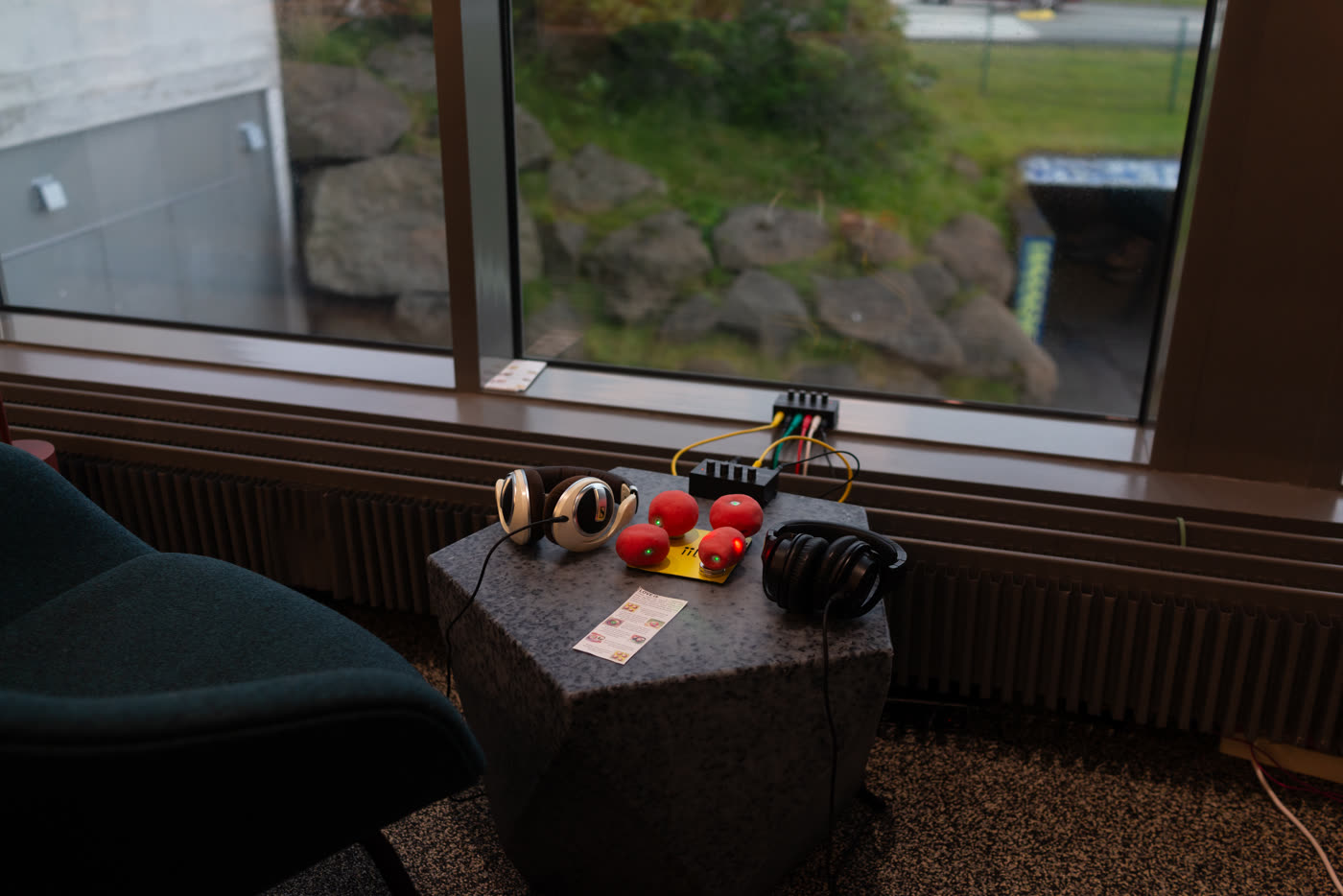
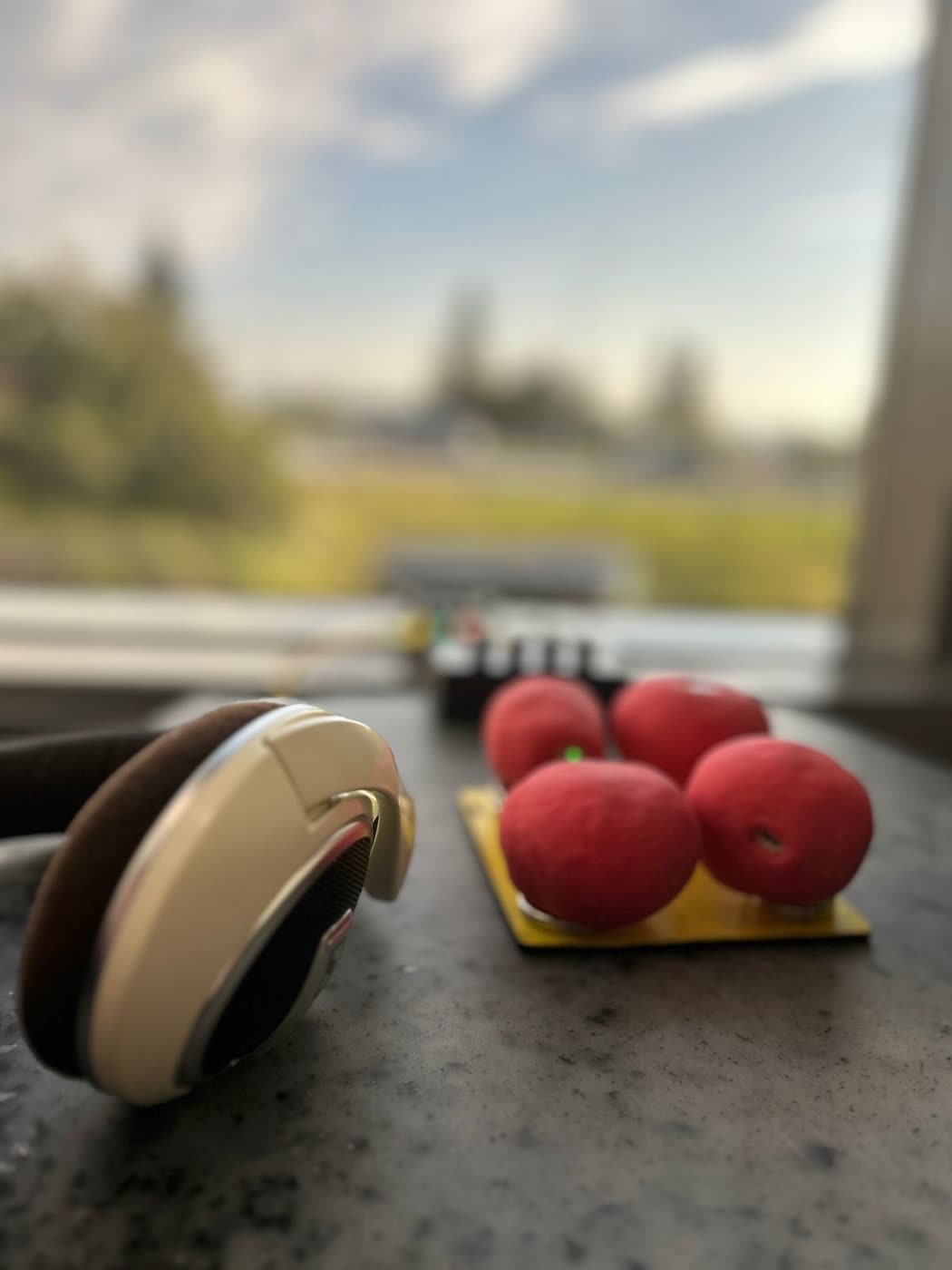
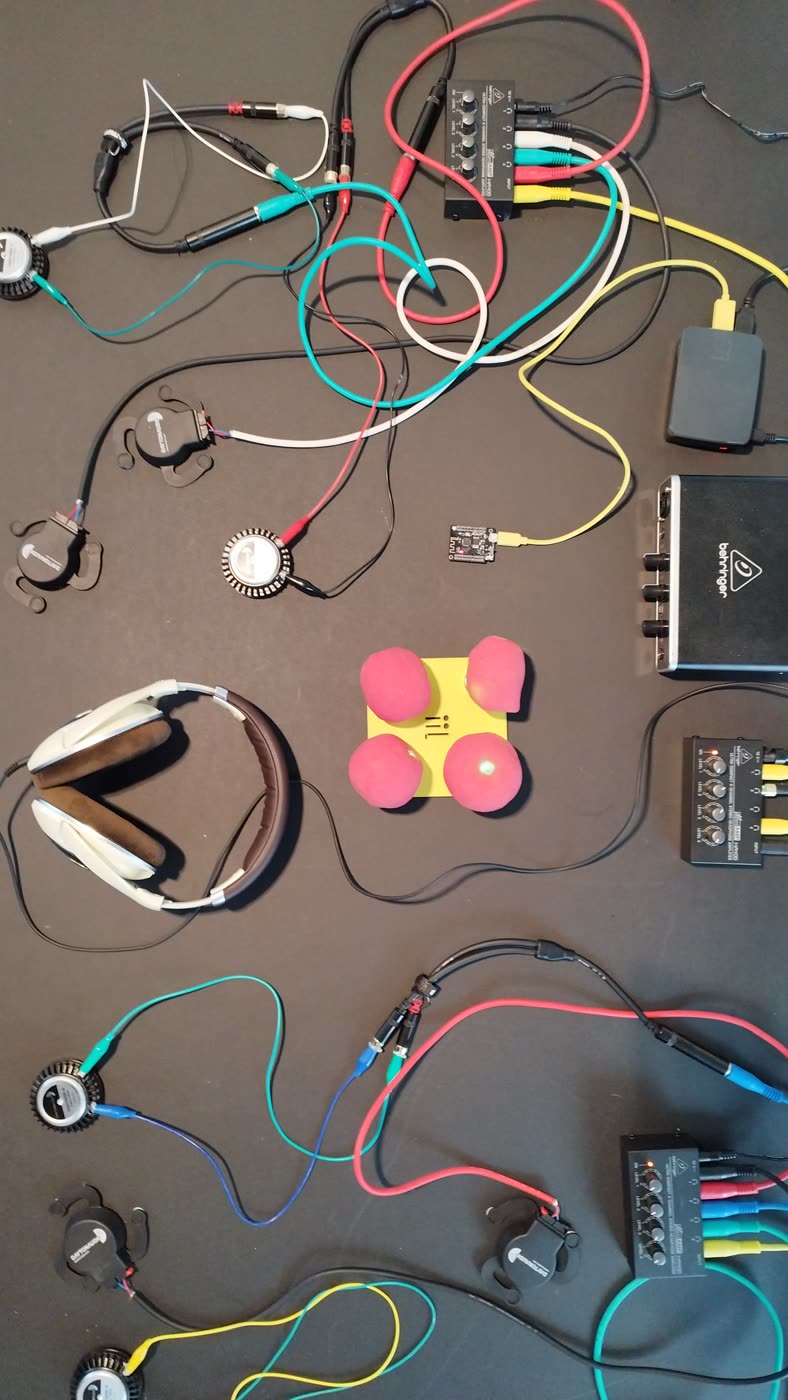
Photos: Hamraborg Festival · Gallery Kannski
Shown at Hamraborg Festival · Bókasafn Kópavogs · 29 Aug – 5 Sep 2024 ↗ and Gallery Kannski · Nov 2024 ↗
The first Love Is: an installation on the perception of our body and the power of our hearts. Presence becomes movement, emotion becomes the beating of our hearts. It needs only a dark room with space to move and a PA system: very simple and very powerful.
An installation about neutron stars, inspired by the scientific sonifications of the Jodrell Bank Observatory, using data from the European Pulsar Timing Array. A dark room, four speakers, and the playful side of scientific sound.
A forceful, immersive, and mysterious experience: listeners feel the changing, rising tides of our world through a live sonification driven by CO₂ measurement. Inspired by Hyperobjects (Timothy Morton); data from the EU Global Surface Water centre and NASA Goddard. Currently seeking funding — and a sound company concerned about climate emergencies willing to lend 10+ waterproof speakers.
Since I discovered my passion for playing music, I have been intrigued by the world of improvisation. I can easily track down the moment when I became fascinated by it, almost obsessed: it was a cassette, a present from my saxophone teacher in south Argentina — a cassette that contained the sweet fire of John Coltrane.
Throughout my career I learned different languages, traveling from jazz and free jazz to contemporary free improvisation. Every place I lived, toured, visited, and people I met gave me something new.
I am still in the quest for new sounds in spontaneous creations: besides my academic research and composition projects, I run different groups where I wonder and wander through the colorful paths of improvisation.
“Inspired by such people as Anthony Braxton, Miguel Crozzoli makes music that is both highly intellectual and emotional.”
“Miguel Crozzoli, saxophoniste ténor, nous rappelle au bon souvenir des saxophonistes ardents de la free music…”“The whole album got me in tension, under a sort of unpredictability spell; these two South American musicians took one tradition and created a sort of newborn genre using improvisation as the main process.”
“Their music draws from the ‘spiritual’ well, as their every note seems to form from somewhere deep and intangible, rising to the surface in expressive waves.”
“Gran trabajo de los tres músicos, destacándose especialmente el saxo de Crozzoli.” darksonification coming soonThe library: the structuring methodology and algorithms behind every design, open on GitHub.GitHub repository
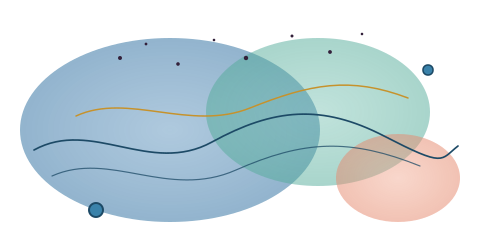 dark oceanThe North Atlantic, 2020–2023: water masses, temperature, salinity and nutrientsopen ♪
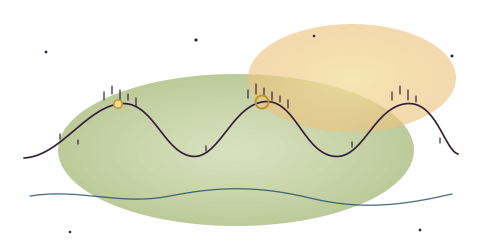 dark re-wildingKnepp Estate, 2023–2026: three years of a rewilding soundscapeopen ♪
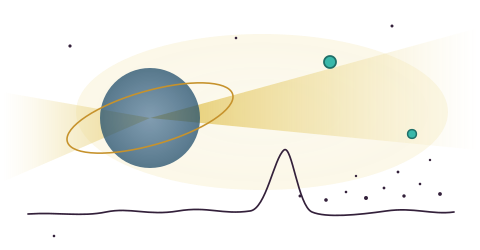 dark pulsar1,297 pulsars: each one's physics as a grain cloud, its real rotation as a pulseopen ♪
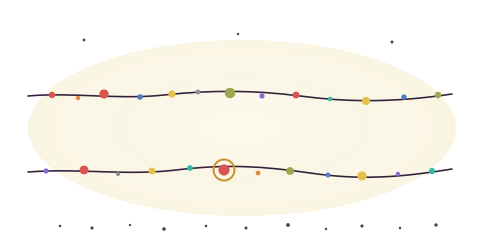 dark sagasThe Icelandic sagas, read for feelings: emotion-focused researchopen ♪
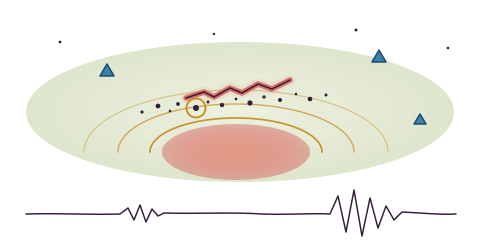 dark earthVolcanoes and earthquakes heard as one resonating body: the Svartsengi eruptions, Reykjanes, 2023–2026open ♪
A multimodal data display design system for entangled human–data relations.
My PhD project at the Intelligent Instruments Lab, University of Iceland, investigating interactive multimodal data design systems. It focuses on the pipelines that transform data into display, structured semiotically so that meaning is made along the way.
Working alongside artists and researchers as a music technology collaborator: composing and performing, and building the technology that makes the work sound: data pipelines, sonification engines, electronics and software.
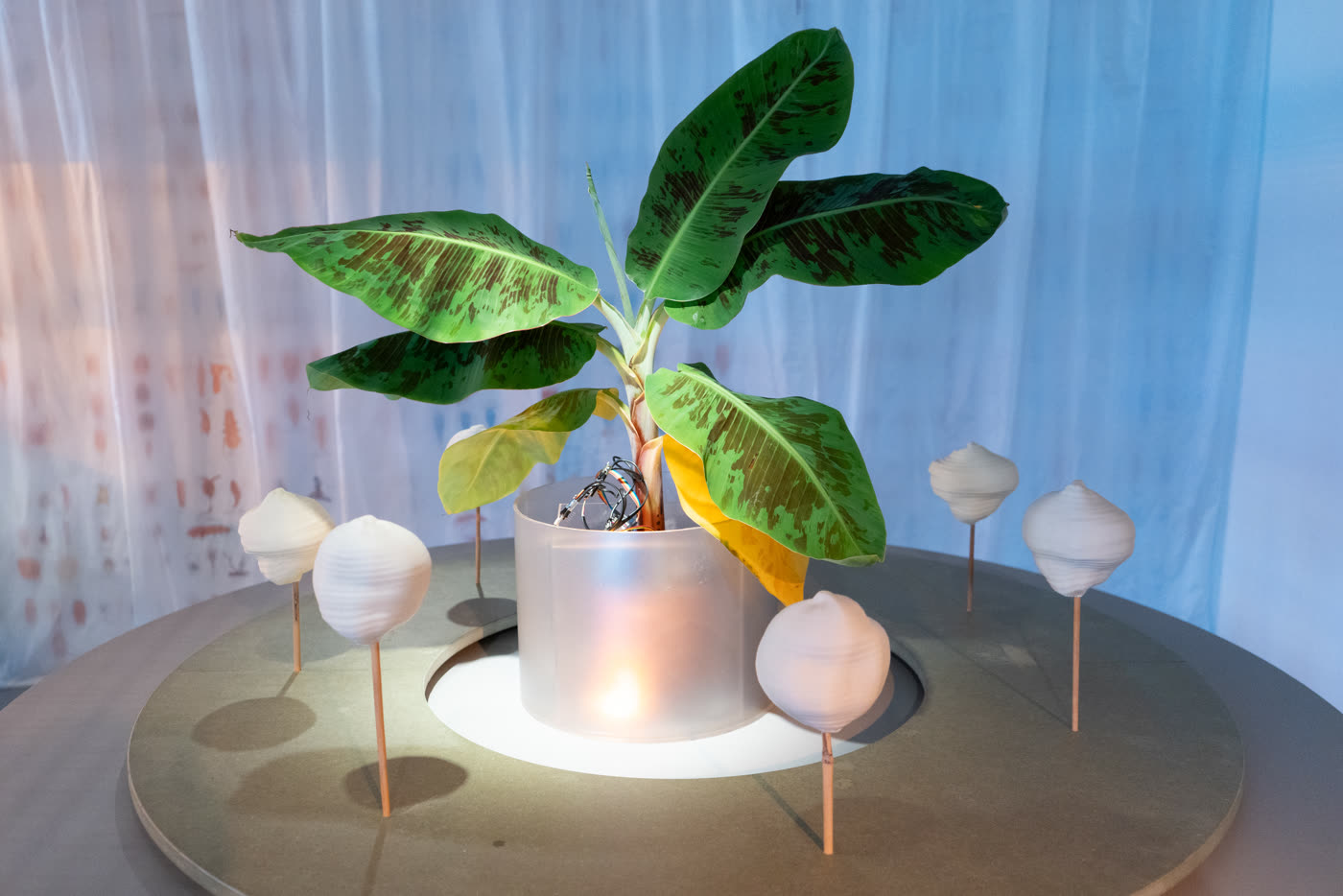
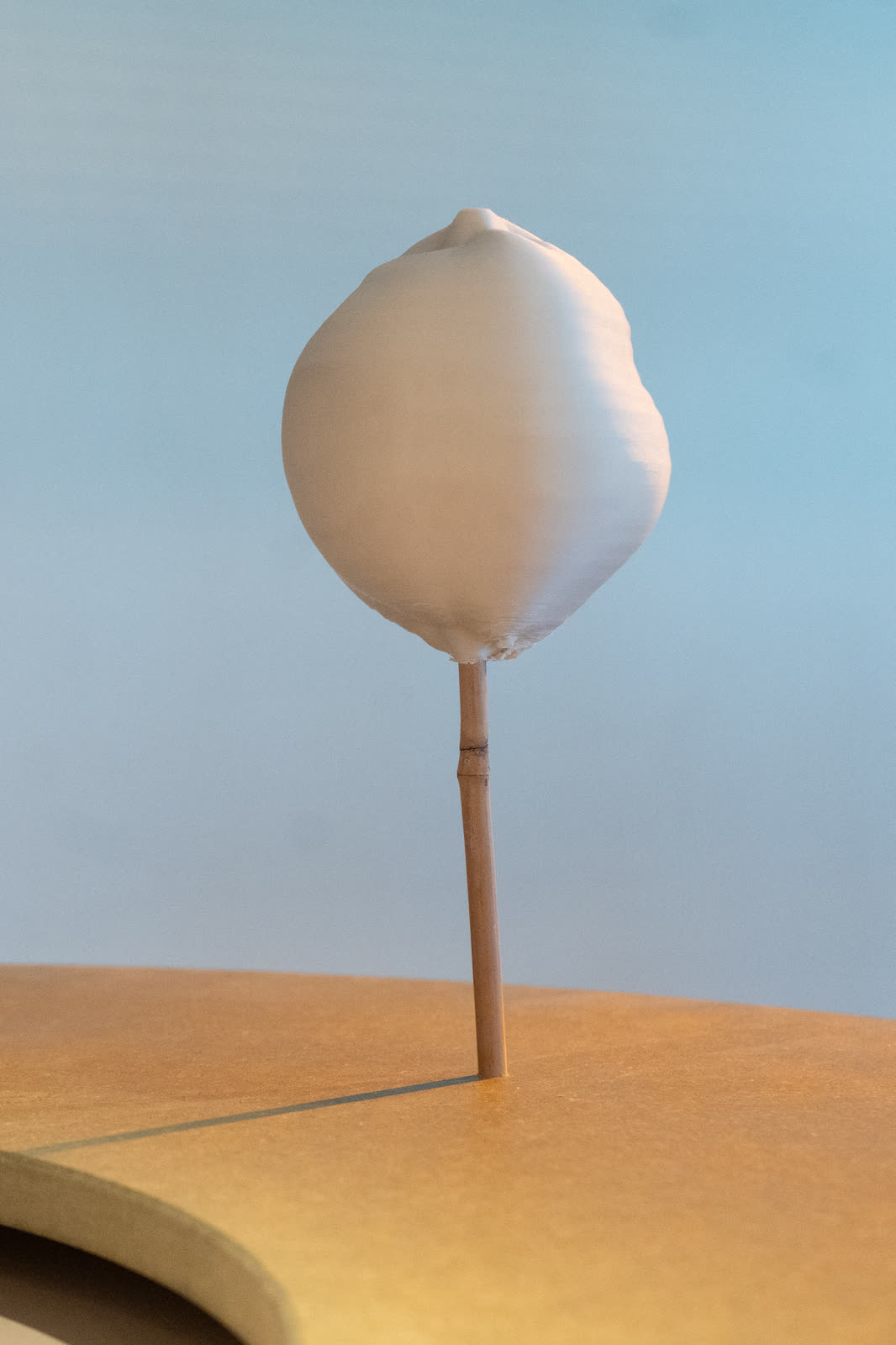
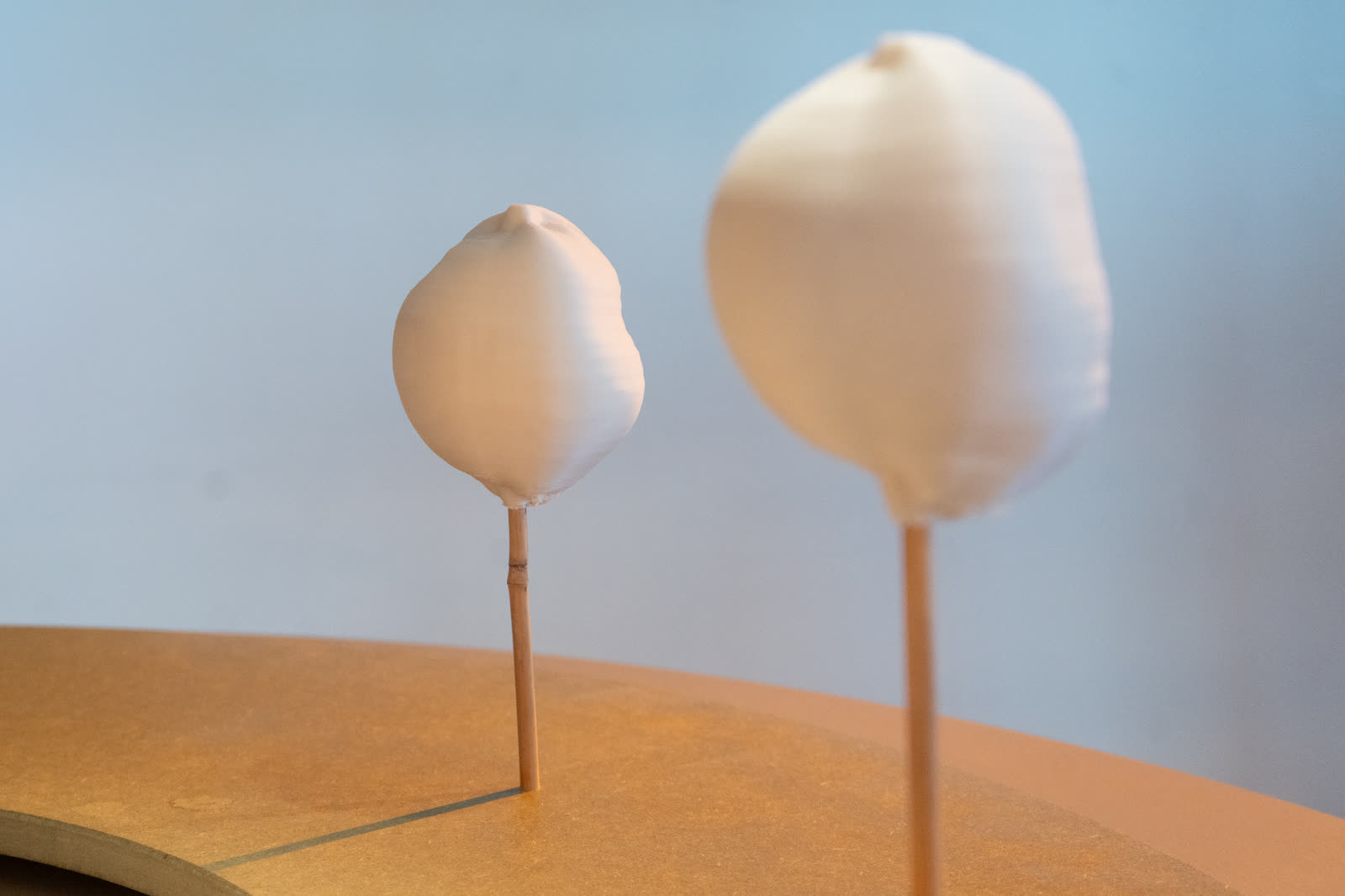
Sensors and microphones among the living plants of a greenhouse capture the hidden pulse of a plant ecosystem. Machine learning shapes that data into small sculptures, each unique to its ecosystem and each with its own voice: a sound-world derived from the harmonic structure of the data. Hold it, listen to it, navigate it.
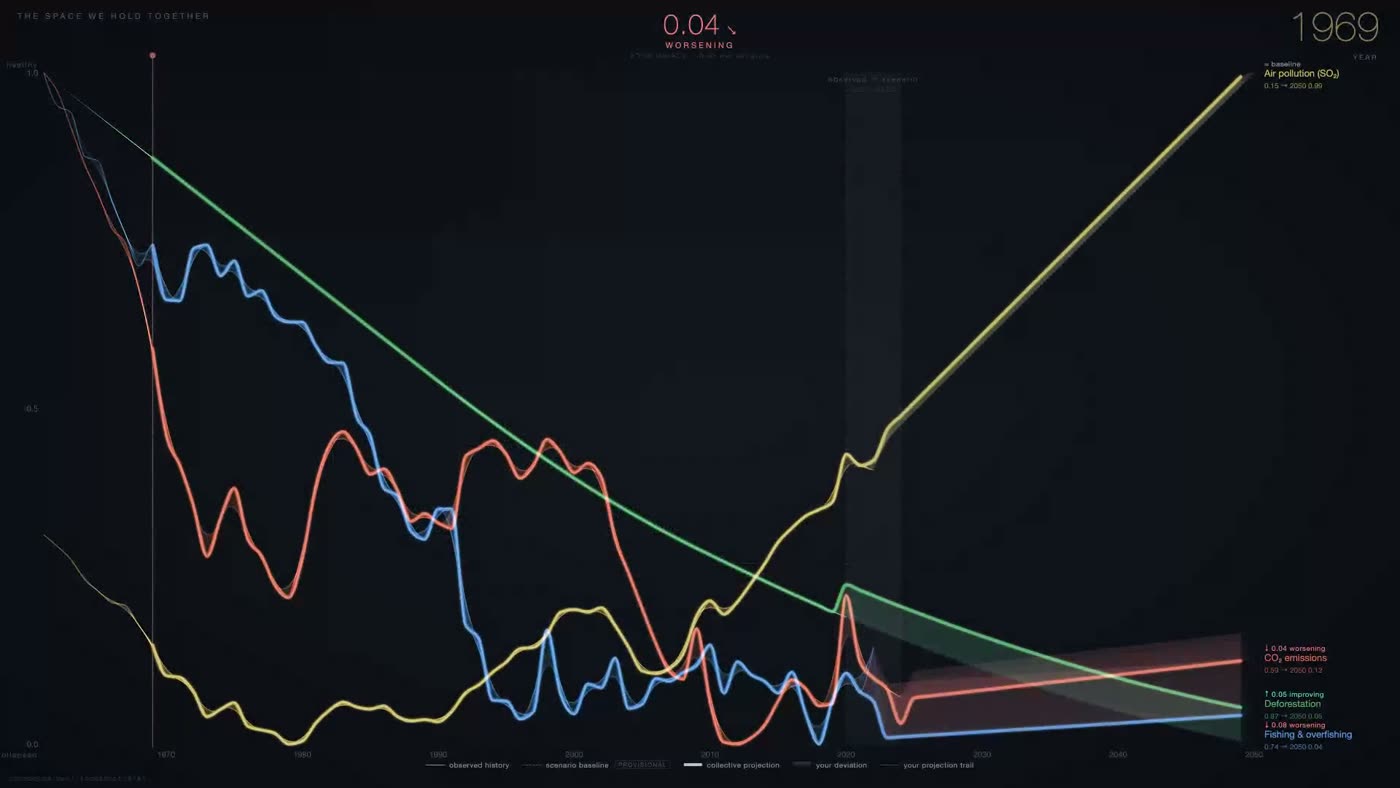
An interactive sound installation on biodiversity loss. Up to five visitors wear bracelets and walk through the room; where they stand together steers a live prediction of biodiversity from 1961 to 2050 across six pressures (CO₂, deforestation, fishing, pollution, invasive species, population). Each visitor's position in the room weighs on a collective action, changing the prediction according to one another's embodied experience, seen through immersive visual projections and heard in dynamic soundscapes.
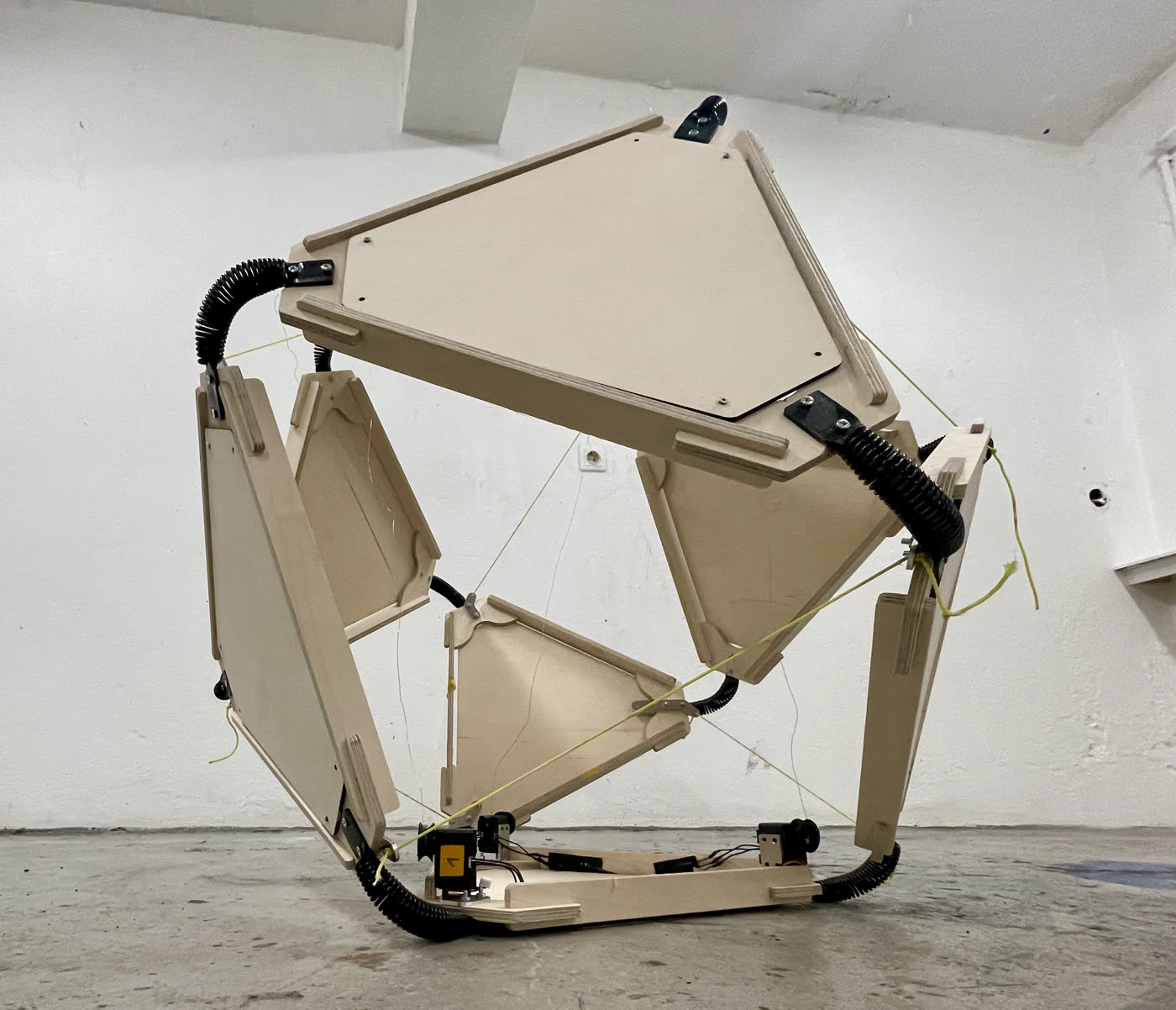
A shape-shifting sound sculpture that listens to its immediate environment. A small weather station (CO₂, temperature, humidity, light) feeds Dark Sonification, which slowly moves the motors of Florian's un:fold, a plywood jitterbug-tensegrity held by strings, and plays through transducers on its panels. As the body folds, string tensions shift and the whole object re-tunes: local weather heard as a wooden body that, over days, quietly inhales, detunes and re-settles.
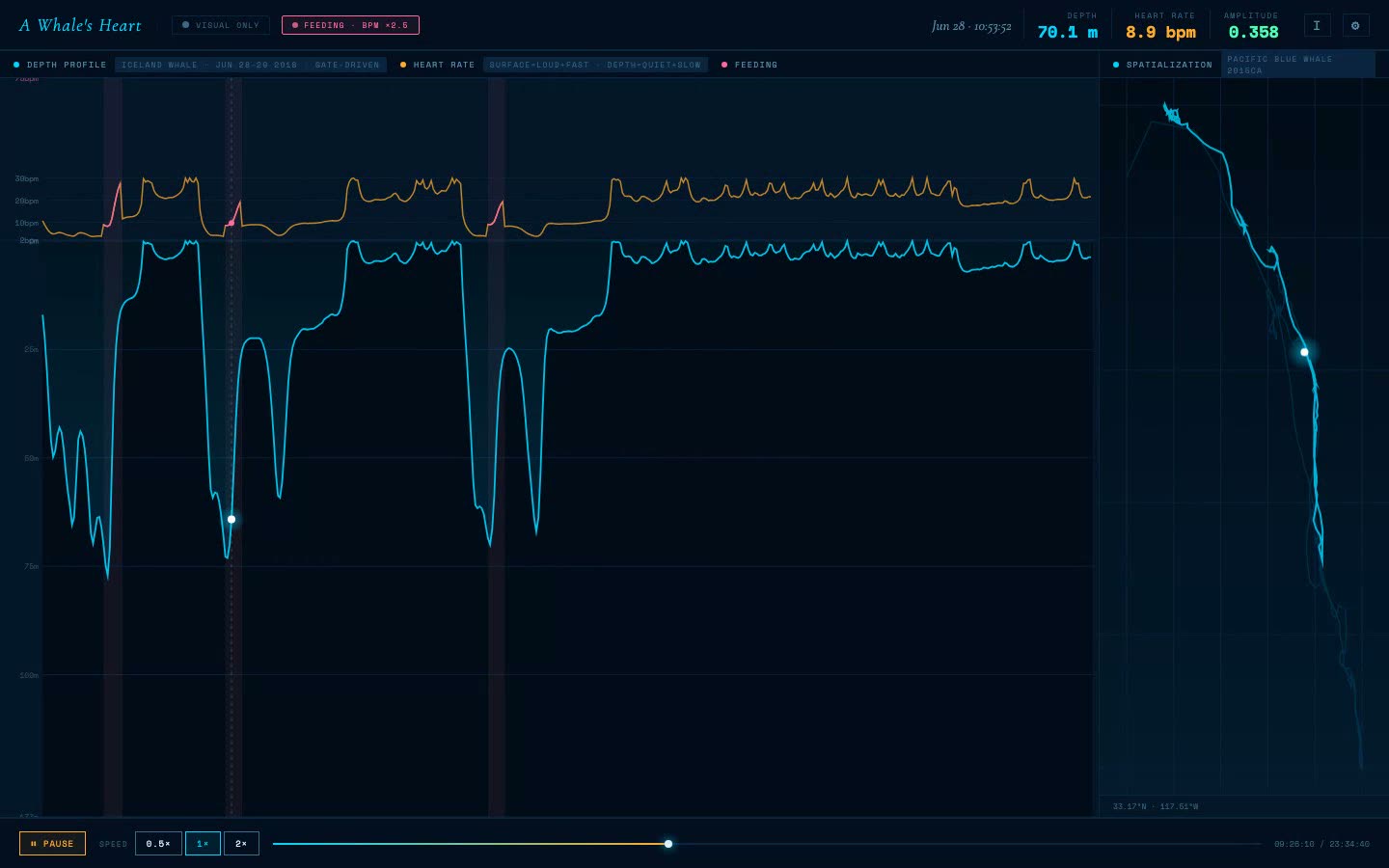
A multichannel sound installation where a whale's heart beats through the space. Tag data from a whale diving off Iceland drives it: near the surface the heart is loud and fast; as the whale dives it slows, from 30 down to 2 beats per minute, and grows quiet.
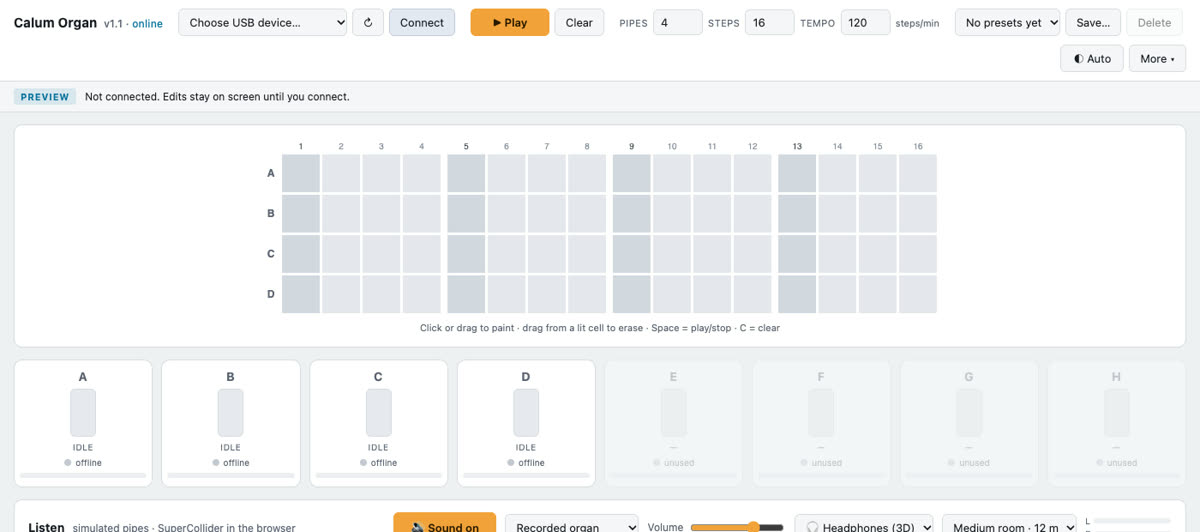
A pipe organ built from solenoid valves, played from the browser. Paint a rhythm on the grid and each of up to eight pipes gets its row over ESP-NOW, ticking in perfect sync; the audience can join from their phones by QR code, and a simulated organ plays when no pipes are around.
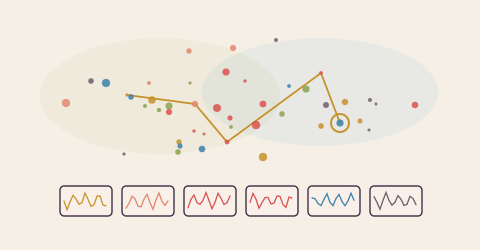
A tool to navigate your music corpus and play it into Ableton Live. Run music analysis in the browser and send data features extracted from your corpus and selected clips to Ableton through dedicated Max for Live devices that you can download in the repository. There is also a quick demo to understand how to use the system.
What becomes possible to perceive when we listen and sense more-than-human life through considered technology?
Ecological data and field recordings from living ecosystems become small, sounding, tactile sculptures: a three-dimensional signature of an inhabited space.
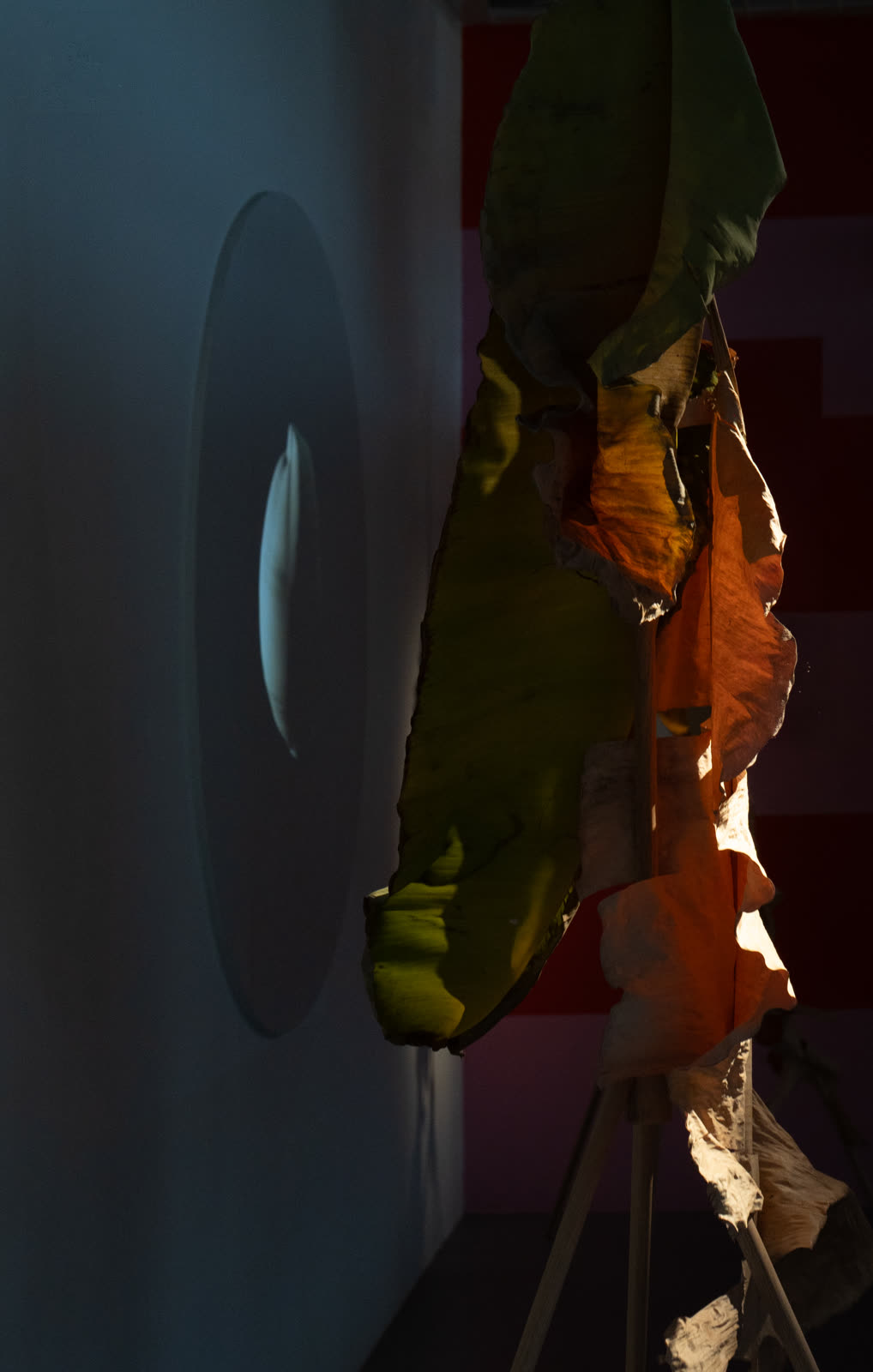
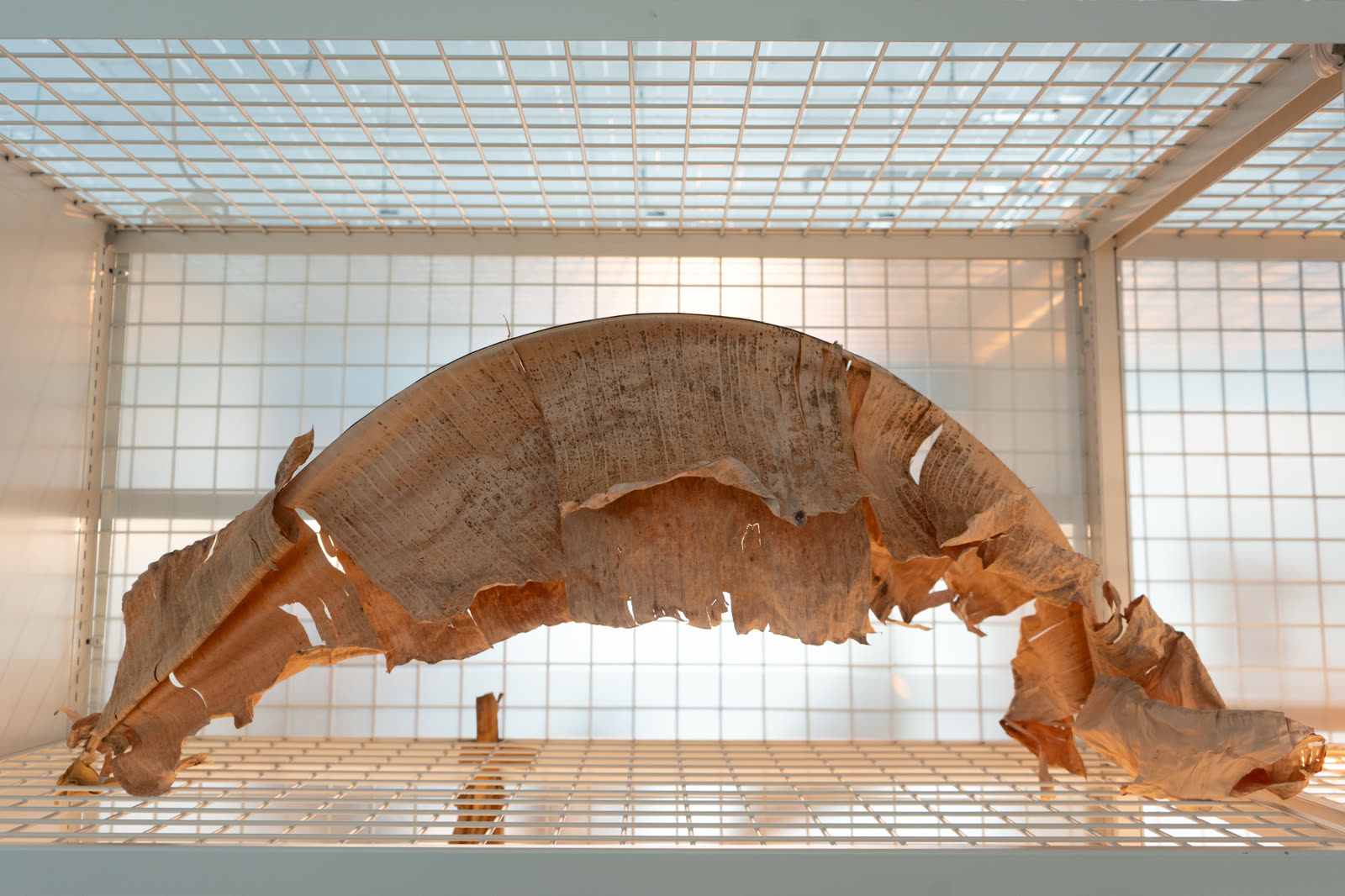
In the botanical greenhouse of the Garden School in Hveragerði, plant roots stretch, bacteria and insects make soil, bees pollinate, sunlight falls across the banana leaves; most of this life unfolds too slowly, too quietly, or at frequencies we aren't built to notice. Plant sensors and microphones gather its traces: growth rhythms, environmental changes, insect presence. Several machine learning algorithms shape the data into a unique digital form, which is then made into a small sculpture.
The data also gives each object its voice: a sound design derived from the harmonic structure of the data. The result is a data sculpture, held and felt, listened to as it voices itself, and navigated as a digital world, so that what was an abstract dataset becomes something to relate to with care.
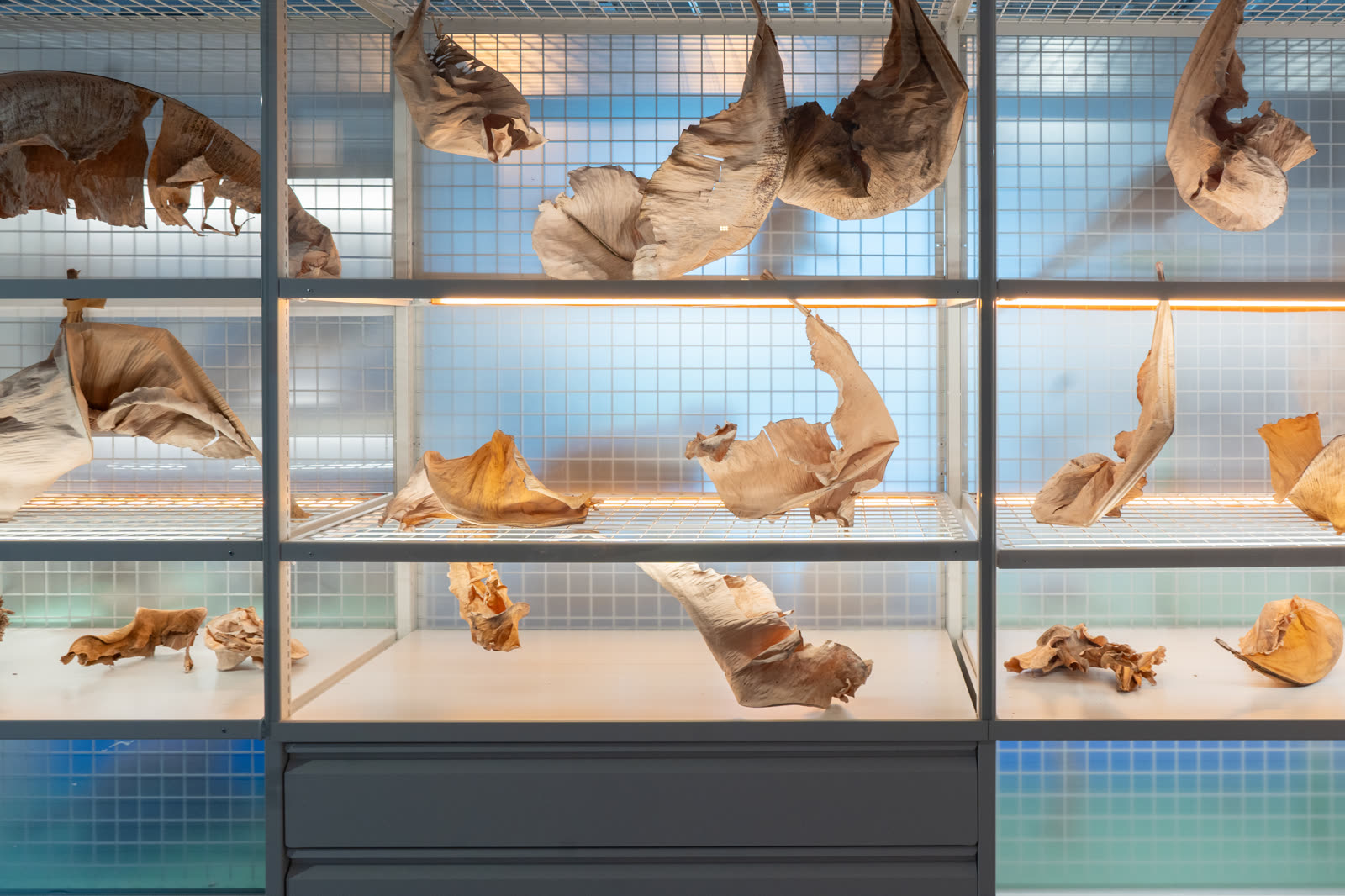
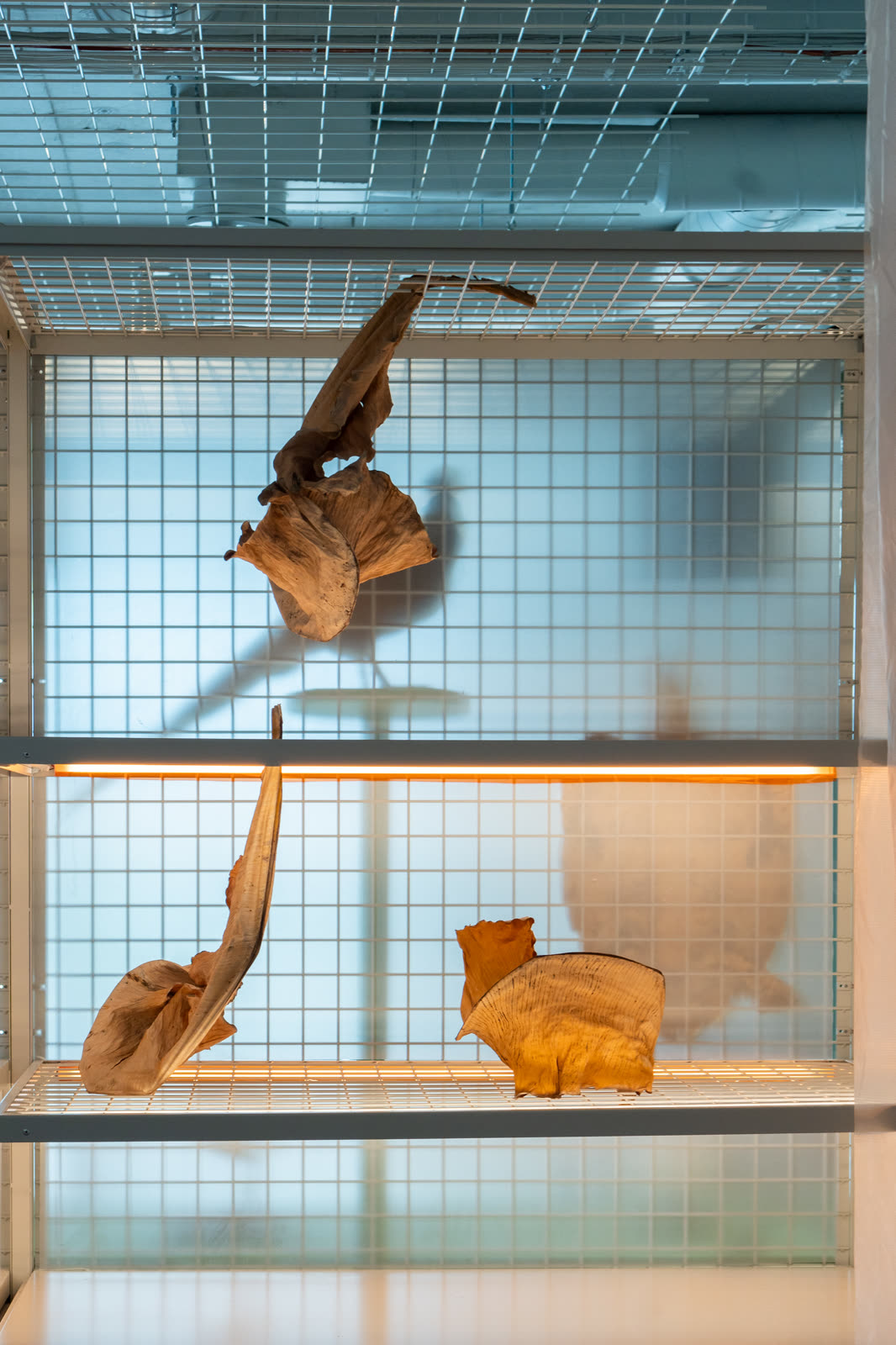
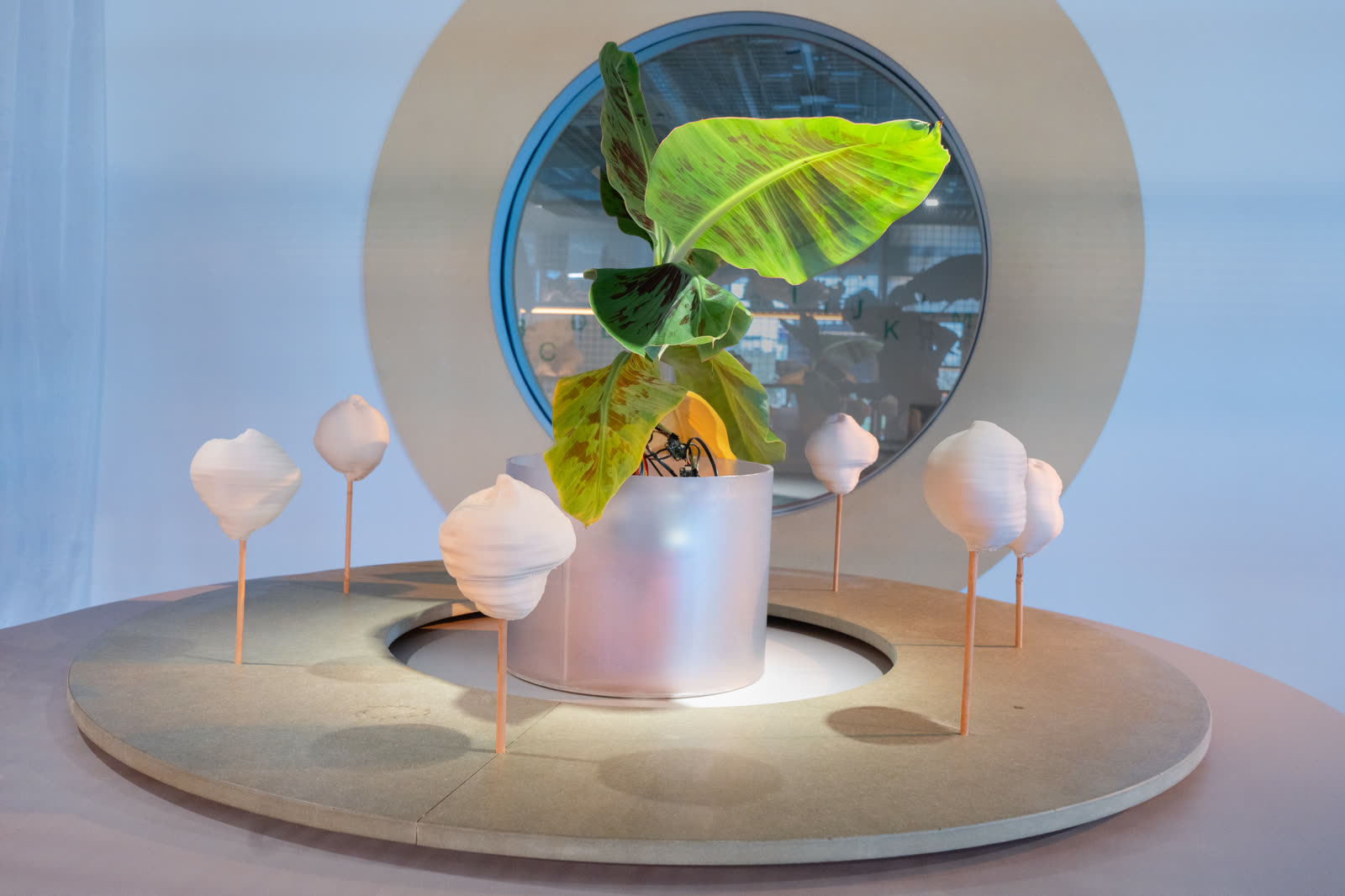
Photos: Hamraborg Festival
A whale's heart, beating through the room. Tag data from a whale diving off Iceland drives a heartbeat you stand inside: near the surface it is loud and fast; as the whale descends, its heart slows to a few beats a minute and falls quiet.
Bryndís Snæbjörnsdóttir and Mark Wilson: concept and proposal, aesthetics, the installation, and the art–science dialogue with the specialists.
Miguel Angel Crozzoli, in collaboration: music technology, sonification and interaction design, software, and composition.
Depth: an Icelandic whale, one depth reading per second over 27 hours, 28–29 June 2018, down to 133 m. From Bryndís Snæbjörnsdóttir and Mark Wilson's project.
Position: Palacios, D. and Mate, B. “Blue and Fin Whale Movements from Tags Deployed in California (2014–2017) and in Oregon (2018).” Marine Mammal Institute, Oregon State University; Axiom Data Science. doi:10.24431/rw1k463 ↗
Sound runs live in the browser and starts on Play. Tested in Chrome on desktop; Safari and phones not yet.
A bell-mounted speaker closes the tube, feeding the instrument's sounds and resonances back through itself.
The feedback saxophone, designed by Halldor Ulfarsson, uses a two-microphone configuration: one at the mouthpiece for frequency content, one at the bell capturing a chaotic, complex feedback signal. Closing different key combinations excites the feedback, while extended techniques such as multiphonics and circular breathing let the acoustic voice of the instrument interact with it.
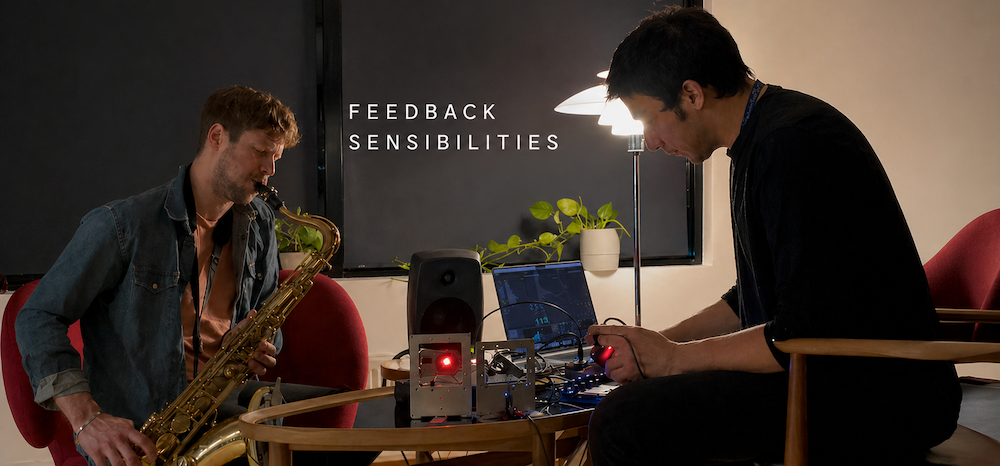
A duo improvisation for feedback saxophone and a custom interface for feedback circuit sniffing, with Stefanos Vasilakis.
The saxophone relies on physical feedback: air, speaker and microphone form a closed acoustic loop inside the instrument. The circuit sniffing interface captures the electromagnetic field of circuit boards through coil inductors and processes it with algorithmic feedback (delay and waveguide mesh) into noise, clicks and resonances. Both improvisers first listen, then play, until the two instruments blur into one shared textural space.
Miguel Angel Crozzoli & Stefanos Vasilakis, Intelligent Instruments Lab, University of Iceland.
 Contemporary
“A wavering ’n’ wondering sound journey into more atmospherically set modern composition.” Roger Batty · Musique Machine · Oct 2024 ↗
“Impressive soundscapes that evoke emotions and move people to action against climate change.” Reporters Online · Dec 2024 (translated from Dutch)
On air: RTVE · Música Viva, 7 Mar 2025 ↗
Two works for ensemble, I Am the Forest (2021) and I Am the Ocean (2022), composed from sonified data on deforestation and ocean contamination.
Calum Builder · Jūra Elena Šedytė · Valeria Miracapillo · Ida Nørby · Johannes Nästesjö · Miguel Angel Crozzoli
 Jazz
Jazz
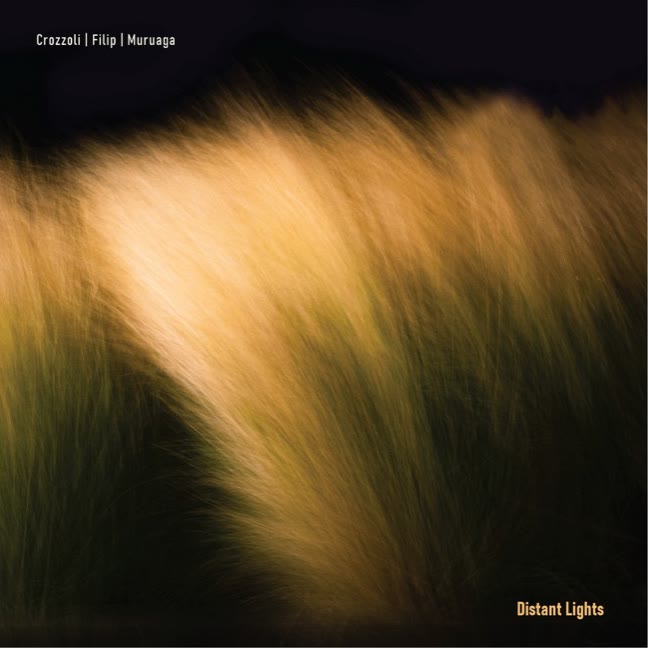
Modern jazz close to free improvisation, after Dewey Redman, Bill Frisell, Paul Motian and Tony Malaby, with an unexpected echo of Argentine folk music.
“Gran trabajo de los tres músicos, destacándose especialmente el saxo de Crozzoli.” info135 · Sep 2024 ↗
 Experimental Contemporary
“Collective, chamber, free-improvised interplay with atmospheric yet suggestive drones.” Eyal Hareuveni · Salt Peanuts · Jul 2021 ↗
 Free Jazz
 Free Jazz
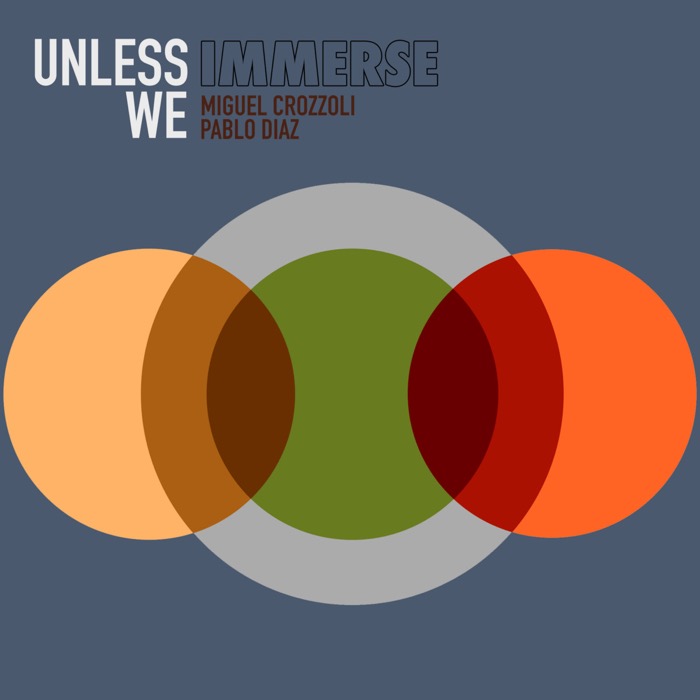
My contemporary experimental cumbia project.
Click a cover to listen, read, and open the score.
Composed from 20 years of deforestation data (Global Forest Watch), sonified into textural nets and spiking chants — the forest's health as music.
Built on ocean-contamination and surface-water data (EU JRC, NASA Goddard) — the dark beauty of a changing ocean, offering awareness and hope.
A four-part meditation on neutron stars — synergies between science and music, released with The Strangement Society.
On colliding black holes — composed in collaboration with Dr. Radoslaw Jan Wojtak of the DARK Cosmology Centre (Niels Bohr Institute).
Orchestral work grown from sonifications of dark-energy research and sounds from our solar system.
The oldest light in the universe, scored for electronic-acoustic orchestra.
Book a project, commission a piece, or just say hi — I'm always interested in new ideas.
miguelcrozzoli@outlook.com →